




Introduction and Characteristics of Dry and Wet Combined Cooling Tower
 27/04/2025
Technical features of dry-wet combined cooling water system: Based on the structure of traditional closed cooling tower, the dry cooling section equipment is innovatively added, which can not only ensure that the cooling water temperature meets various process requirements, but also can operate stably for a long time, save water, reduce emissions, reduce scaling of process equipment, and improve the life of process equipment. Industrial applications show that the innovative system of circulating cooling water can save 50% to 80% of water compared with the traditional system. The following is a detailed introduction to the cooling principle, process flow, core equipment and layout design of the dry-wet combined circulating cooling water system.
Cooling principle: The core equipment of the dry-wet combined circulating cooling water system is the air cooler. The air cooler is a new type of high-yield water-saving cooling equipment that integrates water cooling and air cooling, heat transfer and mass transfer processes. When the temperature is high, the fan and the spray water pump are turned on at the same time. The spray water pump sends the spray water into the spray water distribution system above the heat exchange tube, and the spray water sprays downward to the heat exchange tube, forming a uniform water film outside the heat exchange tube. The water film absorbs the heat in the tube and evaporates to the air. The latent heat of water vaporization greatly exceeds the sensible heat of water heating, so it greatly strengthens the entire heat transfer process and reduces the heat exchange area. As the vaporized water enters the air, the air temperature, humidity and enthalpy increase. After the air passes through the defoaming layer at the outlet to remove the entrained water foam, it passes through the finned tube and is discharged into the atmosphere. The amount of spray water is greater than the amount of water vaporized by the spray, and most of the spray water falls back to the water tank for recycling. The spray water itself is cooled by the air during the falling process. The spray water does not need secondary cooling. The air wet enthalpy curve is shown in Figure 1, and the air cooler working condition analysis is shown in Figure 2.
As the temperature drops, the number of fans and spray pumps turned on is reduced, or the fan speed is reduced by frequency conversion to adjust the heat exchange and maintain the stability of the outlet water temperature. Through heat exchange design, the spray water can be stopped at 0℃, 5℃, and 10℃. At this time, the combined air cooler is equivalent to an induced draft dry air cooler. When the ambient temperature is lower than the set stop spray temperature, there is no need to spray water, which greatly saves water consumption.
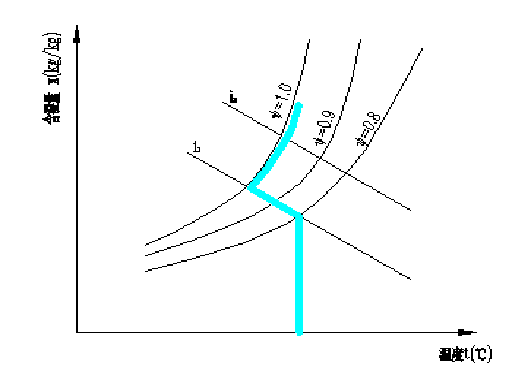
Figure 1: Air humidity enthalpy curve
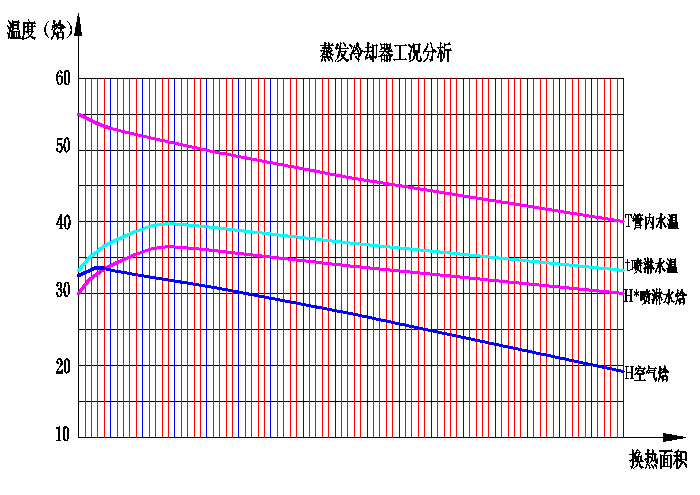
Figure 2: Air cooler operating condition diagram
Process flow: The process flow of the dry-wet combined circulation cooling water system is shown in Figure 3. The dry-wet combined circulation cooling water system uses soft water as cooling water, absorbs the heat of the process heat exchange equipment, and after the temperature is raised, it enters the tube of the combined air cooler (referred to as the air cooler), first enters the finned tube section for pre-cooling, and then enters the spray tube section to further absorb the heat of the air and spray water outside the tube. After cooling, it is pressurized by the circulating water pump to the process heat exchange equipment. Soft water is circulated in the closed circulation system without contact with the outside air to complete the heat transfer process of heat absorption and heat release. Because the quality of closed-circulation softened water is stable and basically not lost, only a small amount of softened water lost due to leakage of system equipment is supplemented.
A small amount of spray water is set in the closed-circulation cooling system, which is used when the temperature is high to ensure the cooling water temperature index required by the process. In order to improve the quality of spray water, a small-scale soft water dosing device can be set up. Softened water only overcomes the resistance drop of equipment and pipelines in the system, and the circulating water pump only needs to supplement this part of the power loss. An expansion tank is set in the closed-loop cooling system to buffer the volume change and exhaust gas caused by temperature change of softened water.
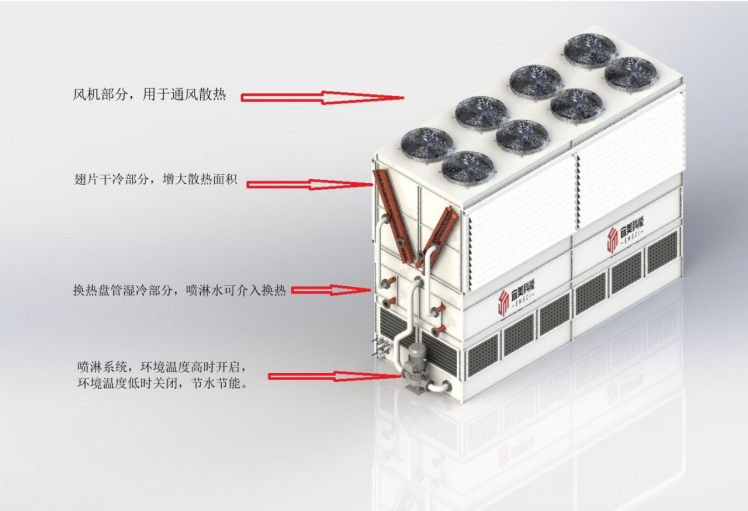
Key equipment: The key equipment of the dry-wet combined cycle cooling water system is the combined air cooler, and its working principle is shown in Figure 3. EMSCI combines the characteristics of traditional equipment to design and develop, which consists of four systems.
(1) Heat exchange tube system. It consists of two parts: the finned tube bundle at the top and the bare tube bundle at the bottom. The softened water in the closed cycle runs in the tube, first pre-cooled by the finned tube section, and then enters the bare tube section for further cooling. The heat exchange tube can be made of copper tube, stainless steel tube or hot-dip galvanized steel tube. It has good anti-corrosion performance and long service life. For easy maintenance, the tube box cover is designed to be removable. The heat exchange tube bundle is arranged in rows and tubes, with a small resistance drop, generally less than 0.08Mpa. The tube box, cover, support plate, and connectors are all galvanized, galvanized or other anti-corrosion treatments.
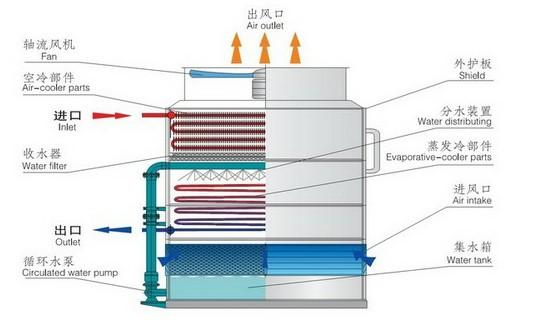
Figure 3: Combined air cooler
(2) Fan system: It consists of a fan, a fan motor, a fan duct, etc. The fan air volume needs to meet the amount required for heat exchange heat load and the pressure head required for wind to pass through the tube bundle. A cooling tower is equipped with one or more fans, and the fan blade angle is changed to adjust the air volume.
(3) Spray water system: It includes a water tank, a spray water pump, and a spray water distributor. The spray water volume must meet the amount required for heat exchange evaporation and wetting and wrapping the heat exchange tube. The main component of the spray water distributor is the nozzle, which must ensure that the water spray is uniform and not blocked. Part of the spray water evaporates, and most of it falls into the water tank at the bottom of the equipment, which is extracted by the spray water pump and recycled. For multiple air coolers, the water tanks are combined into a unified pool to facilitate the filtration and dosing of spray water, prevent the water collection tank from freezing after winter shutdown or the waste of water resources caused by discharging spray water into the sewage network in winter. Centralized spray water is conducive to the centralized control of the spray water pump and daily maintenance management. The floating water rate is <0.01%.
(4) Support system: the framework supporting the above three systems. Its steel structure has been galvanized, galvanized or other anti-corrosion treatments.
Component introduction:
The function of the dry cooling section fin tube is to use a stainless steel tube as the base tube, and arrange a lot of metal sheets on the outside to increase the heat exchange area, so that the heat medium flowing through the fin tube can be cooled under the action of large-area heat exchange and air cooling.
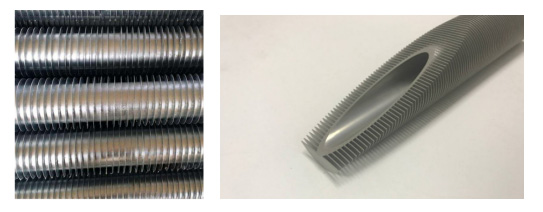
Fin Tube Appearance and Cross-sectional Diagram
EMSCI Schematic Diagram of Dry and Wet Combined Products